In today’s competitive procurement environment, organisations are under increasing pressure to adopt digital tools that make sourcing faster, more transparent, and cost-effective, while improving operational efficiency, and strengthening supply chain resilience. Online auction software is one such solution designed to manage and streamline the process of conducting auctions and competitive bidding events, enabling businesses to connect with multiple suppliers through a centralized digital platform. Among the different types of auctions, reverse auctions - a digital sourcing event in which suppliers compete in real time to offer the lowest price for a product or service - are widely used in procurement.
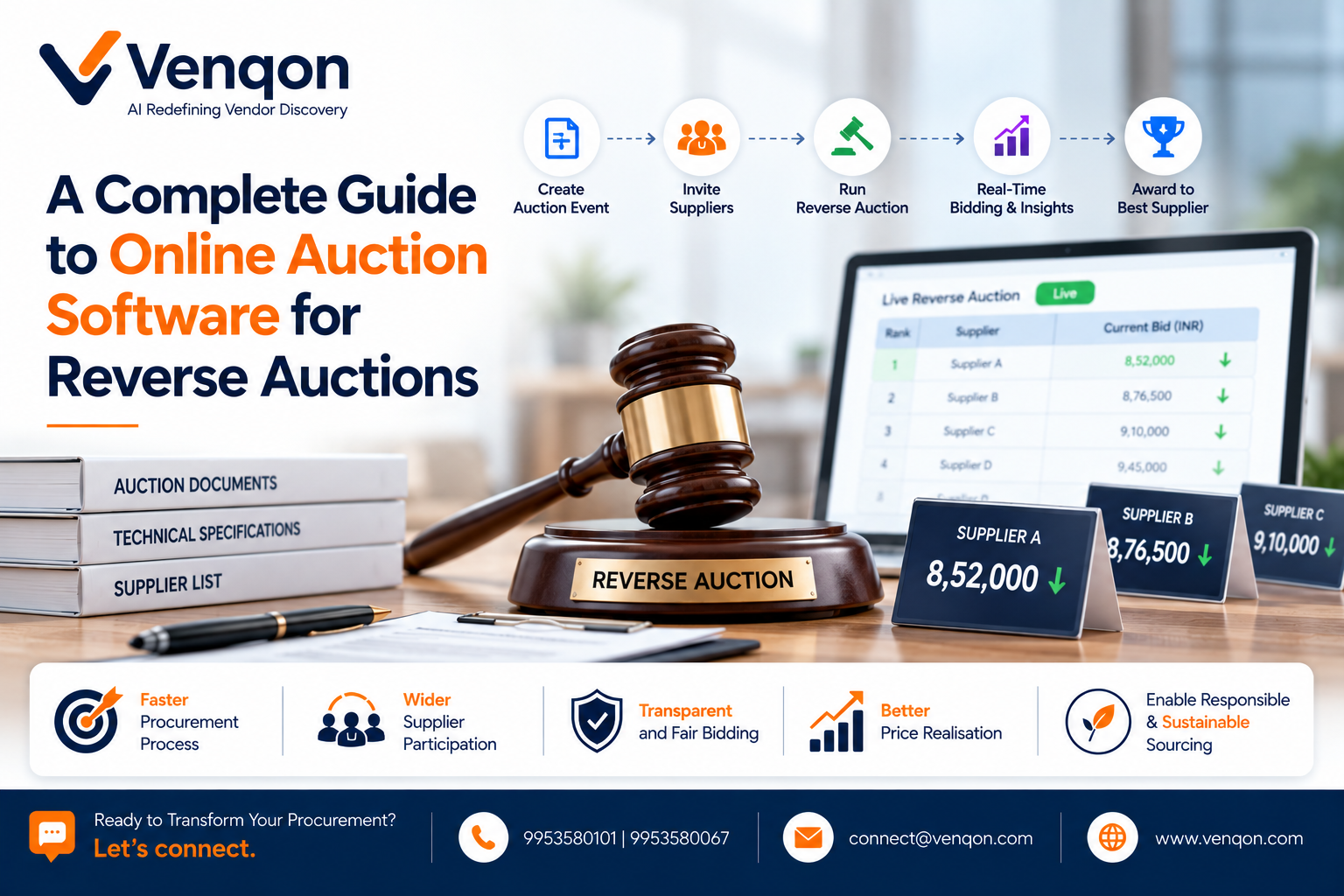
A reverse auction process is a procurement event in which the roles of buyers and sellers are reversed compared with a traditional auction. Instead of buyers competing by offering higher prices, multiple suppliers compete against each other by offering progressively lower prices for the required goods or services to win the buyer’s business.
A reverse auction software provides the digital infrastructure required to help organizations purchase goods and services through competitive bidding. It allows buyers to share clear and well defined specifications, invite qualified suppliers, establish bidding rules, monitor bids in real time, and evaluate the results after the auction.
Understanding how a reverse auction works and flips the traditional auction model on its head can help businesses determine whether this sourcing method is suitable for their procurement needs, as it turns price negotiation into a live, transparent event where suppliers compete against each other. While the exact reverse auction process may vary depending on the platform and procurement category, it generally involves the following steps:
There are several benefits of a reverse auction platform for organizations looking to improve their sourcing processes.
Reverse auction software for procurement is designed specifically to help businesses plan, execute, monitor, and manage reverse bidding events digitally while also fostering strong relationships with multiple vendors by providing insights into their bidding behaviour. Instead of relying on emails, spreadsheets, phone calls, or manual quotation comparisons, reverse bidding software handles the entire process digitally — supplier invitations, live bidding, rule enforcement, and audit-ready reporting through a centralized system.
Modern reverse auction software may include features such as supplier invitations, auction scheduling, a user friendly interface, automated notifications, configurable bidding rules, customizable auction parameters, real-time bid monitoring, bid comparison, audit trails, reporting, integration with procurement or ERP systems, supplier management and real time analytics.
Traditional sourcing often requires procurement teams to send requests to suppliers, who can deliver the required goods or services at a fair price. Asking for bids from potential suppliers using documents like a Request for Proposal (RFP), Request for Quotation (RFQ), or Request for Information (RFI), organizing responses, and manually comparing prices and commercial terms can become time-consuming, particularly when multiple suppliers are involved.
With online bidding software, these activities can be managed within a centralized and secure digital platform that manages the entire sourcing lifecycle. Suppliers can submit bids electronically, and revise their prices during the specified bidding period, encouraging greater competition. At the same time, buyers can monitor the bidding event and maintain all relevant documentation in one place. This can help improve sourcing efficiency, provides greater visibility into the bidding process, and potentially delivers cost savings.
When selecting online reverse auction software, businesses should consider factors such as ease of use, auction goals, supplier management capabilities, real-time bidding functionality, customization options, user experience, reporting and analytics, security, audit trails, and integration with existing procurement systems.
The right solution should provide more than a basic bidding facility. It should help automate auction processes, manage associated activities, and support the organization’s sourcing requirements. Features such as automated supplier communication, configurable auction rules, bid comparison, and centralized documentation can streamline the entire process. A single dashboard can help procurement teams manage the complete bidding lifecycle more efficiently, from supplier registration and evaluation to bidding and final selection.
An online auction software solution can help turn traditional negotiations into structured, transparent, and competitive events. It allows businesses to digitize reverse auctions and facilitate efficient transactions, by enabling competitive bidding among suppliers and supporting optimized purchasing outcomes. From supplier selection and auction setup to real-time bidding and bid evaluation, a reverse auction platform can streamline key procurement activities and significantly shorten procurement cycles, sometimes reducing sourcing time from weeks to just hours.
By supporting automation, analytics, and compliance throughout the sourcing life cycle, online auction software improves transparency, reduces administrative effort, and enables more informed sourcing decisions. For organizations seeking a structured approach to sourcing goods and services that goes beyond traditional purchasing, online reverse auction software can be an effective addition to their digital procurement strategy.