If you run a business in India, you've probably heard the term "GeM" at some point. It has changed the way government departments buy products and services. Instead of long paperwork trails and endless follow-ups, everything now happens online.
But before you jump in, it helps to understand what you're signing up for. Getting listed on GeM is just step one. There's more to the story once you're on the platform.
In this blog, we'll walk you through what GeM actually is, how sellers enter and operate on it, and what really happens once a tender goes live. We'll also explain the GeM tender process.
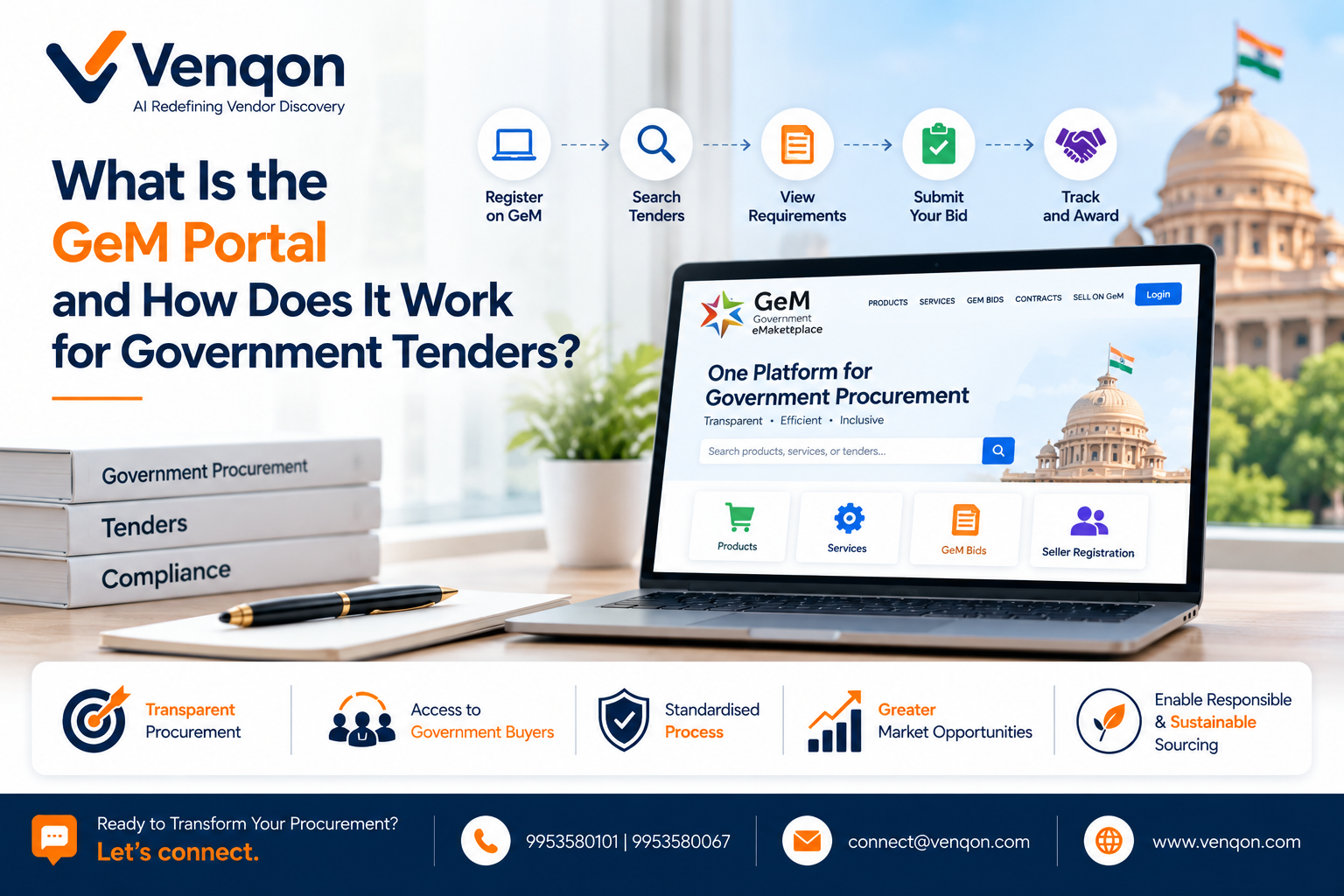
GeM portal stands for Government e-Marketplace. This portal is a platform where government departments buy goods and services from businesses like yours. It works as an online government tender portal for government procurement.
This marketplace has two sides where government buyers stay on one end, and registered sellers and service providers stay on the other. The thing that makes it stand out from listing to product receiving is that everything happens digitally.
Depending on what's needed, a purchase can happen in two ways. Sometimes a buyer picks a product directly. Other times, they open it up for competitive bidding, where multiple sellers compete for the same requirement.
Once you understand what GeM is, the next question is: what does a seller actually do on it, day-to-day?
First, the seller creates a profile and registers themselves on the platform.
After that, it is about staying alert to the requirements posted by government buyers and checking which one matches your sale.
Through the job filter, you can read each buyer’s requirement and decide whether to move forward.
This is really the core loop of being active on GeM: keep your profile updated, watch for relevant opportunities, and evaluate each one before you commit your time to it.
Before you can do any of that, you need to register, and this part is often where first-timers get stuck.
The registration process involves creating a seller account with your business details, then verification and documentation. Registering on GeM isn't always simple. Sometimes even documentation can take a lot of your time. You must have experienced this thing, if you are an MSME who is juggling everything on your own. That's where a little help goes a long way. Venqon steps in to make it easier. It helps MSMEs get registered on the GeM portal, start to finish.
You'll get guided through every step. No guessing what document goes where, or what the portal expects from you. Venqon walks you through it, so your seller account comes out ready to go.
Buyers see this information directly, and outdated or incorrect details can cost you an opportunity before you even get the chance to bid. Also worth remembering, registering on GeM doesn't guarantee you'll win a tender or receive an order.
It simply gets you into the marketplace. What happens after that depends on how well you play the next steps.
Knowing the tender stages is one thing. Actually bidding well is another. Here's what tends to separate a strong bid from a rushed one:
Tenders come with a lot of moving parts. Requirements to meet. Documents to gather. Submissions to get right. If this makes you feel overwhelmed, then Venqon is there for you. This is where we, Venqon, step in and provide help.
It files tenders on behalf of MSMEs. That means less time buried in paperwork for you. You get to stay focused on what actually matters: finding and going after the right government opportunities. None of this is complicated, but it does require patience. Rushed bids are usually the ones that don't go anywhere.
Businesses participate in government tenders through GeM because, through the portal, they can increase their reach. This makes it easier for businesses to explore Government tenders in India. The portal acts as a platform through which you can get access to government buyers. It does not limit you to only one city or state.
And more than that, no lengthy paperwork is required, as everything from submission to tracking happens digitally. Even MSMEs and smaller businesses that were initially limited now can take advantage of it and get into government procurement.
By now, you have understood that GeM provides a structured digital way through which you can sell your services to the government, which initially was not that easy.
But you also need to know that success on GeM is not only about registering and waiting. It is also about choosing the right tenders, meeting every requirement and submitting a bid on time.
Feeling overwhelmed? That's normal. But you don't have to figure it all out alone. A little professional support makes the whole thing easier.
Venqon's got you covered on two fronts. It helps with GeM registration. It also files tenders on your behalf. So whether you're just getting registered or ready to submit, you've got support the whole way through.