Procurement work must have made you experience how an RFQ goes out to a handful of suppliers, then you wait for the replies that sometimes come on time and other times do not.
The quotes that come in at the right time are formatted differently, use different units, and bury the terms that actually matter somewhere in an email thread or PDF attachment.
By the time you've lined everything up in a spreadsheet, half your week is gone, and you still haven't started the part of the job that actually needs your judgment: the negotiation itself.
That's the gap AI-powered RFQ automation and AI procurement automation are starting to close. It's not just about sending requests faster. It's changing how procurement teams walk into a negotiation in the first place, with better information, less guesswork, and a clearer sense of where they actually have leverage. Let's break down what this looks like in practice.
In the past, buying materials for a business was a struggle. People had to send dozens of emails to suppliers and track all the prices in confusing Excel spreadsheets.
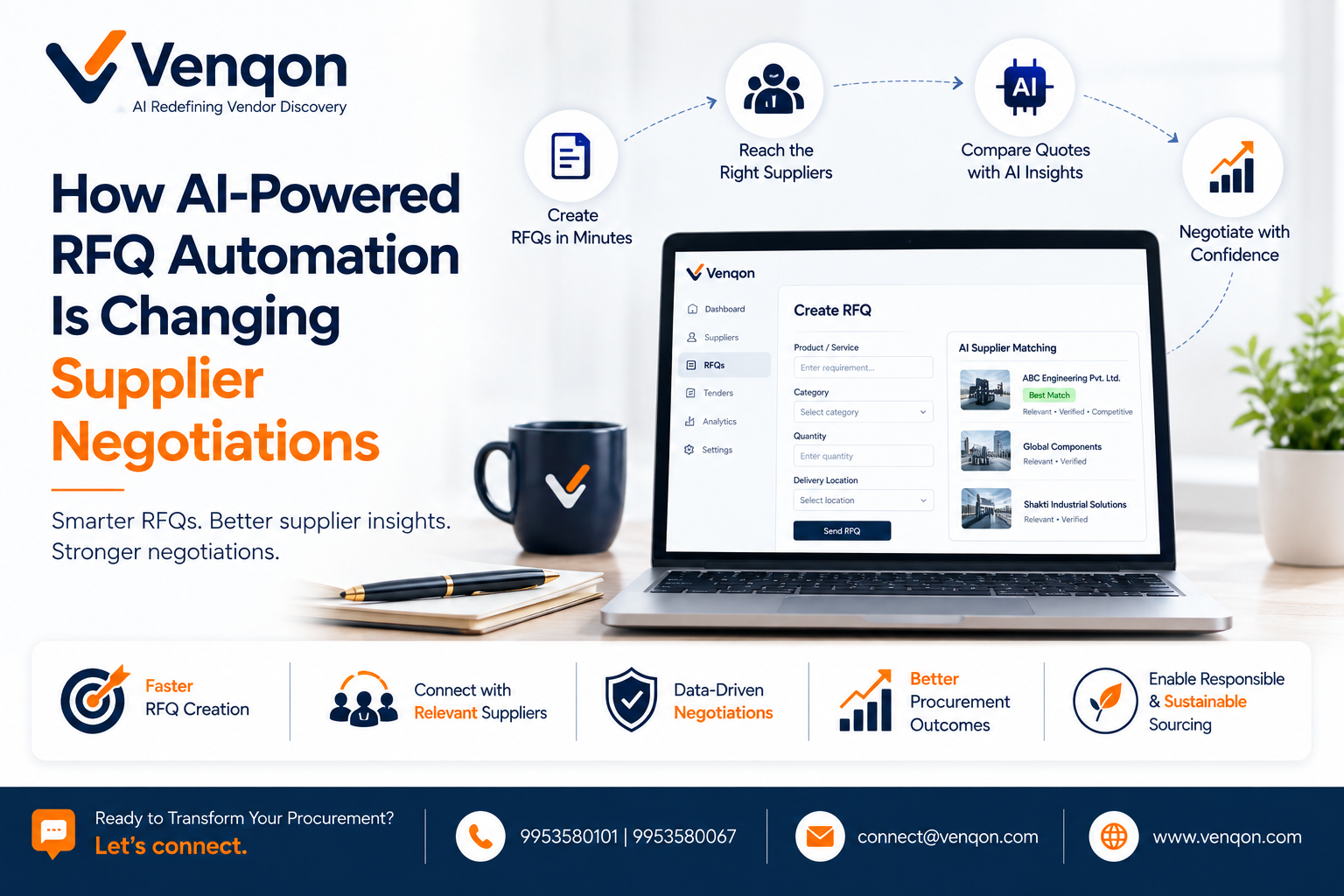
RFQ automation software fixes this. It takes that messy process out of your inbox and puts it into a single, organised computer system that does the hard work for you. Here's the basic shape of it:
That last point is where AI comes in. Instead of you manually reading through every supplier's reply, the system can interpret what's actually being offered, pricing, lead times, minimum order quantities, payment terms, and pull out what matters. It's less about replacing your judgment and more about handing you a clean starting point instead of a messy one.
Think of it as the difference between getting a stack of receipts and getting a spreadsheet someone already built for you. You still make the decisions. You just spend less time preparing to make them.
This is where things get interesting, and it's really the catalyst for this transformation.
But that's not all AI can do. It doesn't just help you handle quotes from suppliers you already know. It can also help you find suppliers you don't. Most RFQ processes stick to the same old list. You reach out to suppliers you've worked with before.
Venqon changes that for you. It can help you discover new suppliers before you even start comparing quotes. You get a wider pool to choose from. More options on the table. And that means more chances to find better pricing. Better capabilities. Better terms.
Instead of squinting at five different quote formats, you get one view. Price sits next to price, lead time next to lead time. You can actually see where suppliers differ instead of reconstructing that picture yourself.
When quotes are laid out side by side, patterns show up that are easy to miss otherwise. Maybe three suppliers are clustered on price, but one is offering noticeably better payment terms. That's the kind of detail that used to get lost in translation; now it's front and centre, and it tells you exactly where to push during negotiation.
You know the feeling of chasing a supplier who's gone quiet. Automated workflows handle that nudge for you, sending reminders and keeping communication consistent, so you're not the one manually tracking who's responded and who hasn't.
Not ever is the same. One might win on price, another on speed, another on reliability. With clearer data in front of you, you can tailor each negotiation instead of running the same script with everyone.
None of this replaces the human side of negotiating, the relationship-building, the read-the-room judgment calls that supplier negotiation automation cannot replicate. It just means you're walking in prepared instead of reactive.
Once the process itself is smoother, the outcomes tend to follow naturally:
The point isn't that AI is doing your job for you. It's that it's clearing away the repetitive parts so you can spend your energy where it counts: actual decision-making.
RFQ automation doesn't exist in a vacuum. It's really one piece of a larger shift toward digital procurement solutions. Once your RFQ data is structured and digital, it can start connecting to other parts of your procurement stack:
When that data flows between systems instead of sitting in isolated spreadsheets, you get something procurement teams have wanted for a while: an actual unified view of sourcing activity, not just a snapshot of one RFQ at a time. That's the direction the wider industry is heading, and RFQ automation is often the entry point into it.
If you're evaluating tools, here's what's worth putting on your checklist:
Not every tool needs to check every box on day one, but these are the areas that separate a genuinely useful system from a glorified email tool.
AI-powered RFQ automation is not only about making the paperwork smoother and faster. It's giving procurement teams a more structured, evidence-based way to approach supplier negotiations.
The repetitive parts- chasing responses, formatting quotes, cross-checking terms- get handled in the background. What's left for you is the part that actually needs a human: reading suppliers, applying commercial judgment, and building the relationships that make sourcing work long-term.
That's really what this shift is about. Not replacing procurement expertise, just giving it better ground to stand on